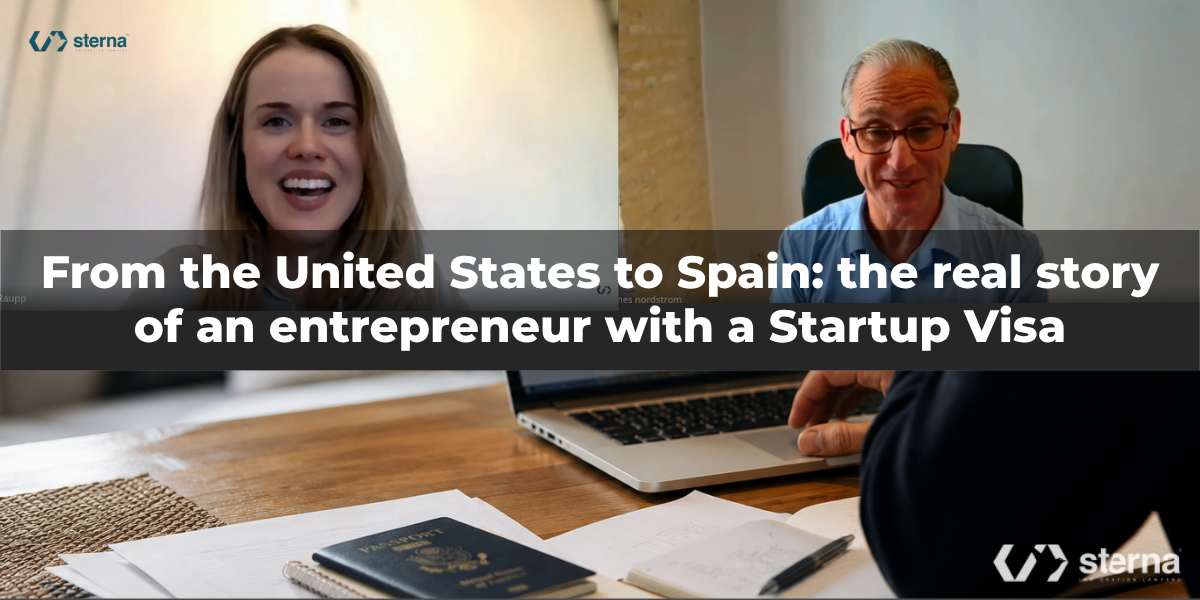
Starting a business in a new country is never an easy decision. Beyond developing a strong business idea, entrepreneurs must also navigate an immigration process that often involves complex legal and administrative requirements.
This is the story of James, an American technology professional with more than 30 years of experience who decided to relocate to Spain to launch an innovative business focused on energy efficiency. His goal was to transform his technology into an internationally scalable company while taking advantage of Spain’s growing innovation ecosystem.
To make this possible, James needed to obtain a Startup Visa in Spain, a residence permit designed to attract innovative entrepreneurs and high-potential business projects. Before receiving approval, however, he faced one of the biggest challenges for any foreign founder: understanding the legal process and ensuring that every requirement was met.
In this article, James shares his experience and the lessons he learned throughout the process, offering valuable insights for anyone considering applying for a Startup Visa in Spain.
Why did he decide to start a business in Spain?
Although James had spent decades building his career in the United States, the idea behind his company began as a personal project.
While renovating an old farmhouse in Pennsylvania, he started researching ways to develop a heating and cooling system that would be more efficient, quieter, and more sustainable. What began as a solution for his own home eventually evolved into a technology with significant commercial potential.
Shortly afterwards, his daughter moved to Valencia to study veterinary medicine. During a visit to help her settle in, James had the opportunity to explore both Valencia and Madrid and quickly realized that Spain offered many of the conditions he was looking for to develop his business.
Beyond its quality of life, he discovered an environment that encouraged innovation, with highly qualified professionals, a strong manufacturing sector, European funding opportunities, and a growing commitment to sustainability and clean technologies.
That experience led him to ask a simple question: could Spain become the place to build his company?
The challenge: obtaining a Startup Visa in Spain
Before making the move, James carefully researched the different immigration options available. He considered alternatives such as the Non-Lucrative Visa and the Digital Nomad Visa, but soon realised that neither was suitable for his situation.
His goal was not simply to live in Spain or work remotely for a foreign employer. He wanted to establish an innovative company, develop new technology and become part of Spain’s entrepreneurial ecosystem. For that reason, the Startup Visa was clearly the best option. However, the more he learned about the application process, the more questions arose.
Preparing a convincing business plan, demonstrating the innovative nature of the project, meeting the requirements established by ENISA, and completing the necessary administrative procedures proved far more complex than expected. On top of that, he had to deal with an unfamiliar legal system in a country where he was still learning the language.
As James explains, his biggest concern wasn’t simply obtaining approval, it was making a mistake that could delay or even jeopardise the launch of his business.
Navigating Spanish bureaucracy: the biggest challenge
Once James had decided that Spain was the right place to launch his startup, he quickly discovered that the most difficult part was not developing his technology but understanding the immigration process itself.
Researching the procedure on his own left him with more questions than answers. He needed to prepare a business proposal that met ENISA’s innovation criteria, gather extensive documentation and complete several administrative procedures involving different public authorities.
At the same time, he had heard stories from friends and relatives who had struggled with even relatively simple administrative tasks, such as booking appointments or applying for a Spanish foreign identity number (NIE).
Those experiences made him realise that proper planning would be essential from the very beginning. To learn more about all the requirements,, you can visit Sterna Abogados’ dedicated page about the work permit for entrepeneurs.
Professional guidance allowed him to focus on his business
While continuing to develop his patent, building his company’s website and establishing relationships with manufacturers in the Valencia region, James realised he simply couldn’t dedicate the time needed to fully understand every aspect of the immigration process. Instead, he decided to seek professional legal advice.
According to James, having a clear roadmap made a significant difference throughout the entire application process.
Knowing exactly which documents to prepare, what each step involved and what deadlines needed to be met gave him confidence and peace of mind. Rather than constantly worrying about paperwork, he was able to concentrate on what had brought him to Spain in the first place: turning an innovative idea into a successful business.
As he puts it:
“I just needed someone to tell me where I had to be, when I had to be there, and what I needed to sign.” For many international entrepreneurs, that level of certainty can be just as valuable as the business idea itself.
Building his startup from Spain
After successfully completing the application process, James relocated to Spain and continued developing his technology from Valencia.
Today, he works closely with local manufacturers while continuing to refine his energy-efficient solution. For him, Spain has become much more than a place to live, it offers access to talent, industrial capabilities and an innovation ecosystem capable of supporting ambitious international projects. Looking back, he says he would make exactly the same decision again.
His experience demonstrates that starting a business in Spain as a foreign entrepreneur is entirely possible with a solid project, careful planning and the right legal guidance.
What advice does he have for other entrepreneurs?
After going through the process himself, James has a clear message for anyone considering applying for a Startup Visa in Spain.
His first recommendation is to thoroughly understand the requirements before beginning the application. Knowing what to expect from the process helps avoid unnecessary mistakes and allows entrepreneurs to make informed decisions from the outset.
He also strongly encourages applicants to seek professional advice from specialists who understand Spanish immigration law and can guide them through every stage of the procedure, particularly when multiple public authorities are involved.
Finally, he recommends embracing Spanish culture, learning the language and making the most of the professional and personal opportunities the country has to offer.
At Sterna Abogados, we help international entrepreneurs successfully apply for a Startup Visa in Spain, providing personalised legal advice tailored to every business project.