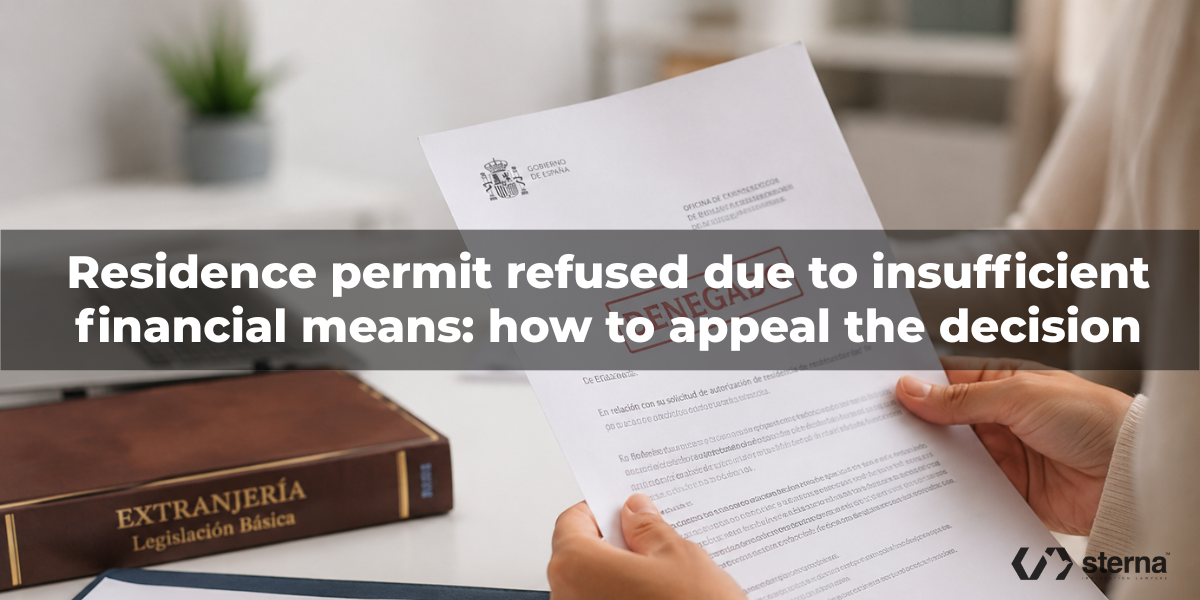
Receiving a residence permit refusal due to insufficient financial means can be both frustrating and stressful, particularly if you believe you submitted all the required documentation. However, a negative decision does not necessarily mean that your application has come to an end. In many cases, it is possible to challenge the decision by filing an appeal and providing additional evidence to demonstrate that you meet the financial requirements.
In this article, we explain why a residence application may be refused for insufficient financial resources, the appeal options available under Spanish immigration law and the key factors to consider before starting the process.
Why can a residence permit be refused due to insufficient financial means?
Many Spanish immigration procedures require applicants to prove that they have sufficient financial resources to support themselves while living in Spain without relying on the public welfare system. When assessing an application, the Immigration Office reviews the evidence submitted to determine whether the applicant meets the minimum financial thresholds established for the specific residence permit. If the authorities conclude that the available funds have not been adequately demonstrated or that the supporting documentation is insufficient, they may refuse the application.
Some of the most common reasons for a refusal include:
- Not meeting the minimum financial threshold required by law.
- Providing incomplete or outdated bank statements.
- Failing to demonstrate the lawful origin of the funds.
- Submitting documents that do not meet the formal legal requirements.
It is important to remember that each type of residence permit has its own financial requirements, so every refusal should be assessed on a case-by-case basis.
What should you do if your residence application is refused?
If your Spanish residence permit application has been refused because of insufficient financial means, the first step is to carefully review the decision issued by the Immigration Office. The refusal notice will explain the legal grounds for the decision, the reasons why the financial requirements were considered unmet and the appeal options available, together with the applicable deadlines.
Before taking any further action, you should consider:
- Reviewing all the documentation submitted with your application.
- Checking whether any supporting documents can be updated or supplemented.
- Assessing whether the Immigration Office may have misinterpreted the evidence or incorrectly applied the law.
- Seeking advice from an immigration lawyer to evaluate the prospects of a successful appeal.
Every case is different, so the most appropriate strategy will depend on the specific circumstances of your application.
How can you appeal a residence permit refusal?
Spanish immigration law provides different legal remedies to challenge a refusal, depending on the type of application and the circumstances of the case. The most common options include the following:
Administrative appeal
An administrative appeal allows the Immigration Office to review its own decision where there are grounds to believe that the evidence has been incorrectly assessed or that the law has been misapplied.
Depending on the circumstances, it may also be possible to submit additional documentation to demonstrate that the financial requirements are in fact satisfied.
Judicial appeal
If the administrative appeal is unsuccessful, or where it is more appropriate to bring the matter before the courts, applicants may file a judicial appeal within the legal time limit.
Judicial proceedings involve a more detailed legal assessment and professional legal representation is generally recommended.
What documents can help demonstrate sufficient financial means?
One of the most important aspects of any appeal is providing clear and convincing evidence that you meet the financial requirements applicable to your residence permit. Depending on your situation, useful supporting documents may include:
- Recent bank certificates.
- Updated bank statements.
- Employment contracts or salary slips.
- Tax returns.
- Documents proving the lawful origin of your income or savings.
- Any other evidence demonstrating that you have sufficient financial resources.
All documentation should be accurate, consistent and tailored to the specific requirements of the residence permit you are applying for.
How long do you have to appeal?
The deadline for challenging a refusal depends on the type of appeal available and the decision issued by the Immigration Office. For this reason, it is essential not to delay once you receive the refusal notice. Missing the legal deadline may prevent you from challenging the decision altogether.
If you are unsure which appeal procedure applies to your case, seeking legal advice as soon as possible is highly recommended.
What happens if your appeal is unsuccessful?
An unsuccessful appeal does not necessarily mean that you have exhausted all available legal options. Depending on the circumstances, you may still be able to pursue further legal remedies or submit a new residence application once the financial requirements can be fully demonstrated. The most appropriate strategy will depend on the reasons for the refusal and your individual circumstances. For this reason, refusals based on insufficient financial means should always be assessed carefully, taking into account both the evidence submitted and the legal reasoning used by the Immigration Office.
Obtaining specialist legal advice can help you determine whether the decision can be challenged, prepare the necessary documentation and choose the most appropriate legal strategy. If your Spanish residence permit application has been refused due to insufficient financial means, obtaining legal advice at an early stage can significantly improve your chances of a successful outcome.
At Sterna Abogados, we provide tailored legal advice on residence permit refusals, immigration appeals and Spanish immigration procedures. We will carefully review your case, assess the reasons for the refusal and help you choose the most effective legal strategy to protect your rights and immigration status in Spain.